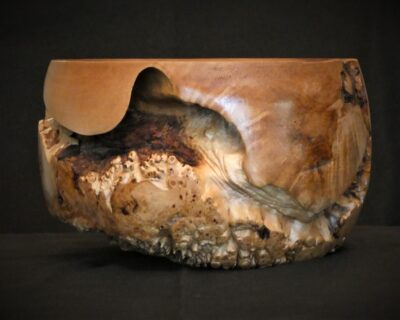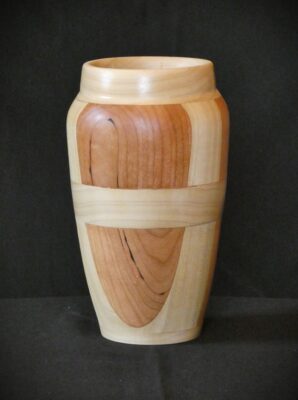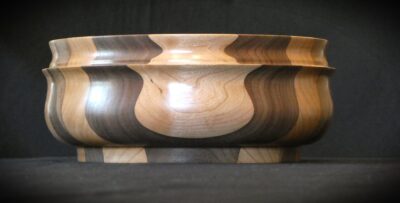
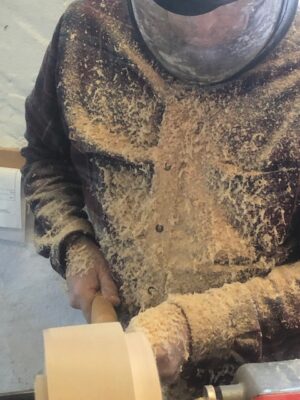
After retiring as Chief of Medicine in 2010 from a local Medical Center, I discovered a previously unknown interest in woodturning. Prior to then, I had never touched a lathe. Turning an undistinguished piece of wood into something of beauty is incredibly satisfying. North American native woods—walnut, cherry, oak, hickory, poplar, box elder and cedar—highlight different features in each of the bowls, platters, plates vases I turn. Including “defects”--knots, cracks and inclusions, only enhances their beauty. Contrasting and complementary strips of different woods and grains yield intricate and fascinating shapes and patterns, furthering the uniqueness of each piece. I start with previously dried planks of the wood I want to turn into one of my pieces, trying to ensure that any "defect" will be apparent in the finished product. The starting material may a square blank 4 inches thick or boards one to two inches in thickness which will be turned into plates and platters. Alternatively, the boards may be cut into three to five inch high by 7 to 11 inch long strips and stacked horizontally or vertically in the case of vases to give complementary or contrasting starting blanks for many of my unique pieces.